Karnak Ancient Egypt: Temple, Columns, and Divine Mysteries
Located on the eastern bank of the Nile in Luxor, the Temple of Karnak is one of the most impressive religious complexes ever built in human history. A true open book spanning more than two millennia of Pharaonic history, Karnak captivates visitors with its grandeur, mystery, and timeless beauty.
Here, time does not simply pass it moves in spirals, like incense rising toward the gods.
Every stone, every column, and every hieroglyph is a fragment of eternity.
In the beginning, there was Amun.
Karnak was not born from a single dream, nor from a single reign.
For nearly two millennia, pharaohs, priests, and master builders worked one after another to create this sanctuary dedicated to Amun-Ra, the sun god, lord of Thebes, and father of all light.
Around the Great Temple stretches a sacred world covering more than 100 hectares, a vast religious landscape of temples, chapels, obelisks, sacred lakes, and ceremonial avenues.
- To the south stands the Temple of Mut, the Mother Goddess, guardian of the moon and the mysteries of femininity;
- To the north lies the Temple of Montu, the falcon-headed god of war;
- And to the west rises the Temple of Khonsu, son of Amun, who watches over the journey of the celestial bodies across the sky.
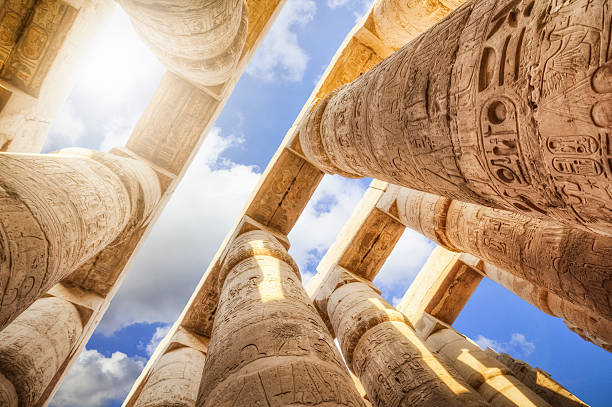
The 134 Columns of Karnak, Egypt
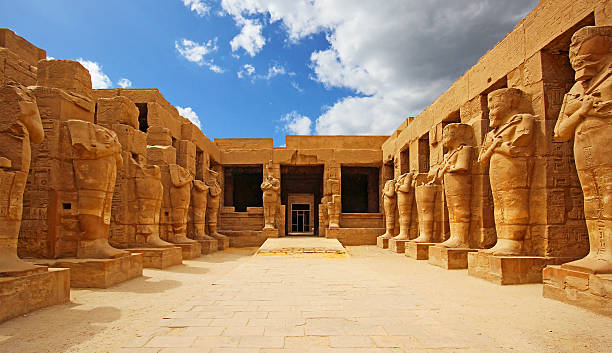
As you enter the Great Hypostyle Hall, the modern world fades away.
Suddenly, your gaze is lost in a forest of 134 monumental columns, rising like gigantic papyrus stalks. Their height exceeds twenty meters, and their capitals unfold like lotus flowers beneath the sun.
Morning light filters through in golden shafts, carving the shadows as if guided by an artist’s brush. The air feels cooler here, carrying the scent of sand and ancient stone. Hieroglyphs—still retaining traces of their original colors in some places—tell stories of offerings, battles, and sacred processions, a whisper of eternity etched into the limestone.
It is said that when the wind blows gently, it makes the columns resonate like a divine instrument: the very breath of the gods.
The Avenue of the Sphinxes and the Sacred Lake
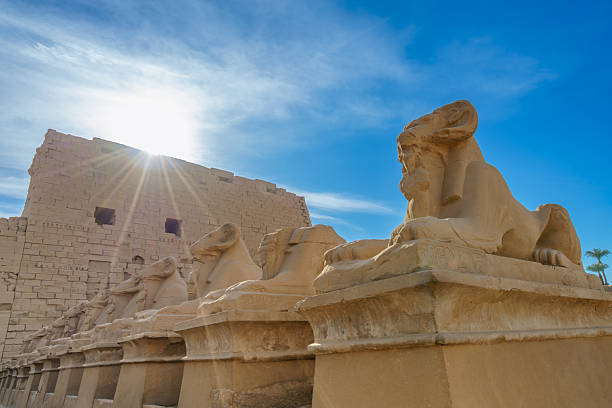
Leaving the Great Hypostyle Hall, your steps lead you toward the Avenue of Ram-Headed Sphinxes, the sacred symbol of Amun.
This ceremonial road once stretched for nearly three kilometers, linking Karnak to the Temple of Luxor. Imagine the grand processions of ancient times: priests clothed in fine linen, clouds of burning incense, hymns echoing through the air, fragrant perfumes, and the statues of the gods carried in gilded barques beneath the blazing Egyptian sun.
A little farther on, the Sacred Lake shimmers in stillness, like a fragment of the sky fallen to earth. Here, priests came to purify themselves before participating in sacred ceremonies, immersing themselves in waters believed to be blessed by Ra.
At twilight, the shadows of palm trees dance across its surface, and one could almost imagine the souls of the pharaohs returning to gaze upon their reflections in the tranquil waters.
The Pharaohs and the Memory of Stone
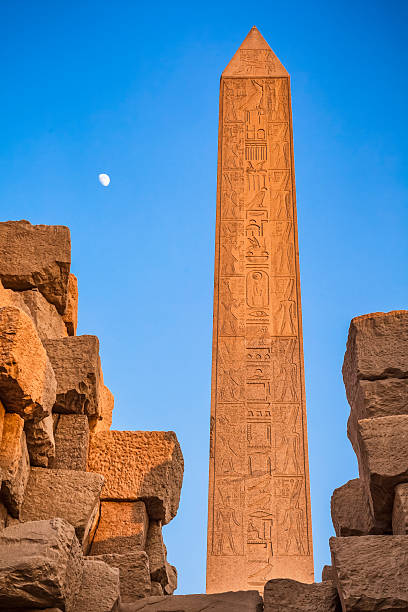
Each pharaoh left a mark here, a lasting testament to his reign:
- Senusret I laid some of the earliest foundations of the sacred complex.
- Thutmose III, often called the Napoleon of Ancient Egypt, had his military victories carved into the temple walls.
- Hatshepsut, the female pharaoh, raised a soaring obelisk—a message of light reaching toward the heavens.
- Ramesses II, the great builder, ensured that the glory of his name echoed through even the highest reliefs and monuments.
Yet these rulers did more than raise stones. They sought to converse with the divine.
Their prayers became architecture, their devotion took shape in sandstone, and their dreams were transformed into monuments that have endured for millennia.
Today, as the sun illuminates the walls of Karnak, the legacy of these pharaohs lives on , not only in the inscriptions they left behind, but in the timeless dialogue between humanity, faith, and eternity.
Karnak: Night and the Sound of Time
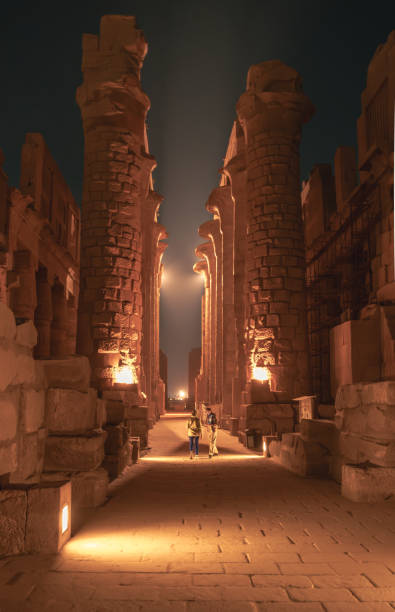
The heat subsides, the wind begins to rise, and the stone seems to awaken from a long slumber.
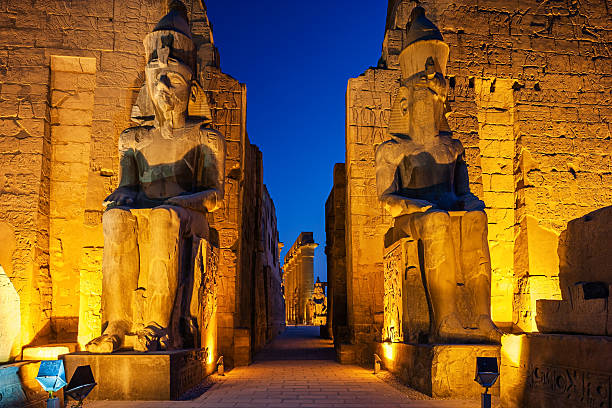
Torches are lit, and the Sound and Light Show begins.
Deep, captivating voices emerge from the darkness.
They tell the legends of Amun, the victories of Ramesses, and the devotion of peoples long vanished from the earth.
The columns are draped in shades of blue shadow, while the obelisks blaze with golden light.
For a fleeting moment, the temple is reborn, and the visitor is no longer a tourist , they become a witness to eternity.
Karnak: The Beating Heart of Egypt
To visit Karnak is to walk through a dream where time no longer flows.
It is to feel the weight of history and the lightness of sunlight at the same moment.
It is to understand that Egypt is not merely told, it is experienced.
The Temple of Karnak is not a relic of the past; it is the living breath of the Egyptian soul, a poem carved in stone that continues, century after century, to whisper to travelers the secrets of the gods and the stars.